
Tank Farm Installation
A Tank Farm Installation refers to the design, construction, and management of large storage facilities that hold bulk quantities of liquids such as petroleum products, chemicals, edible oils, or industrial raw materials. These storage systems are critical for industries like oil & gas, petrochemicals, power generation, food processing, and water treatment.
A Tank Farm Installation is an engineered facility designed for the bulk storage, handling, and distribution of liquid products such as petroleum, chemicals, liquefied gases, water, and edible oils. It plays a crucial role in ensuring uninterrupted supply chains for industries like oil & gas, petrochemicals, power, manufacturing, and food processing.
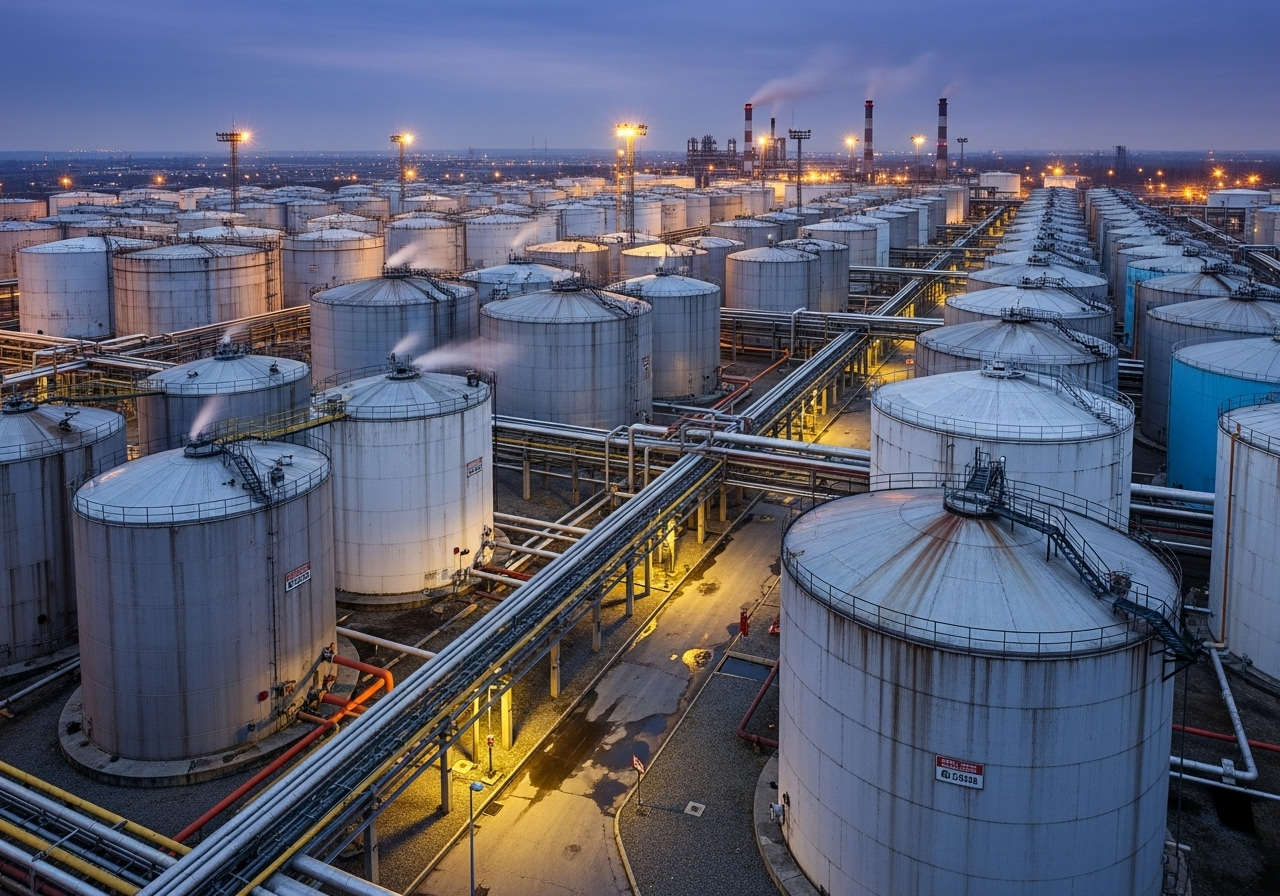
Types of Storage Tanks Used
- Fixed Roof Tanks – Suitable for low-volatility liquids like water, diesel, and lubricants.
- Floating Roof Tanks – Ideal for volatile products like crude oil, gasoline, and naphtha; reduces evaporation losses.
- Spherical Tanks (Horton Spheres) – Used for liquefied gases like LPG, LNG, and ammonia under pressure.
- Horizontal Cylindrical Tanks – Common for smaller storage capacities (fuel stations, industrial plants).
- Double-Walled Tanks – Provide added safety for hazardous or environmentally sensitive liquids.
Key Systems in Tank Farm Installation
- Product Transfer System – Network of pipelines, pumps, and valves ensuring smooth inflow/outflow.
- Metering & Gauging System – Flow meters, level transmitters, and sensors to track stock.
- Heating & Cooling Systems – Steam coils or refrigeration units for temperature-sensitive products.
- Automation & SCADA – Supervisory control systems for real-time monitoring, leak detection, and remote operations.
- Environmental Control – Vapor recovery units (VRU), effluent treatment plants, and spill containment systems.